A 2020 Mercedes-Benz Sprinter used in daily DHL courier service arrived at our workshop. The vehicle came to us after a previous inspection elsewhere, where the exact cause of jerking during gear changes had not been identified.
A delivery van used every day has a demanding life. Constant starts, braking, parking, load changes, and city traffic quickly reveal problems that may not be as noticeable in a regular passenger car. That is why we started with a detailed diagnostic process and inspected the vehicle step by step.
The main issue was an unpleasant movement of the vehicle during shifting. The diagnostics showed that the transmission mount was torn. During every gear change, the drivetrain moved and the whole vehicle jerked.
We checked:
We also found that two gear linkage rods were no longer functioning properly. They were out of position and, in practice, were not supporting the shifting system as they should. There was also significant sweating around the seal, which would require transmission removal if repaired later.
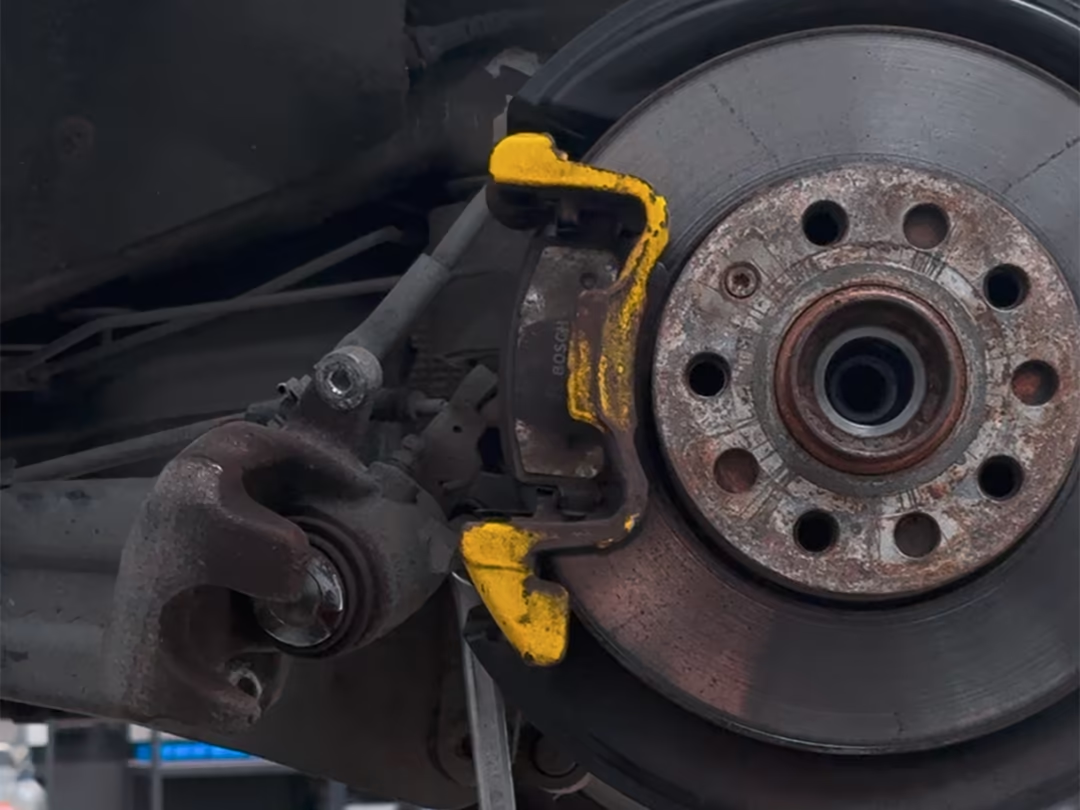
The next part of the inspection focused on the brakes and clutch. The brake pads still had usable material, but the discs had been overheated and had a noticeable edge. On a courier van, this makes sense — the vehicle brakes, stops, and starts again constantly. The overheating and disc edge were the reason for the squeaking noise from the brake system.
We inspected:
The clutch showed signs of wear, but it was still working. We verified its condition with an endoscopic inspection so it was clear whether replacement was immediately necessary or if the part could still be monitored.
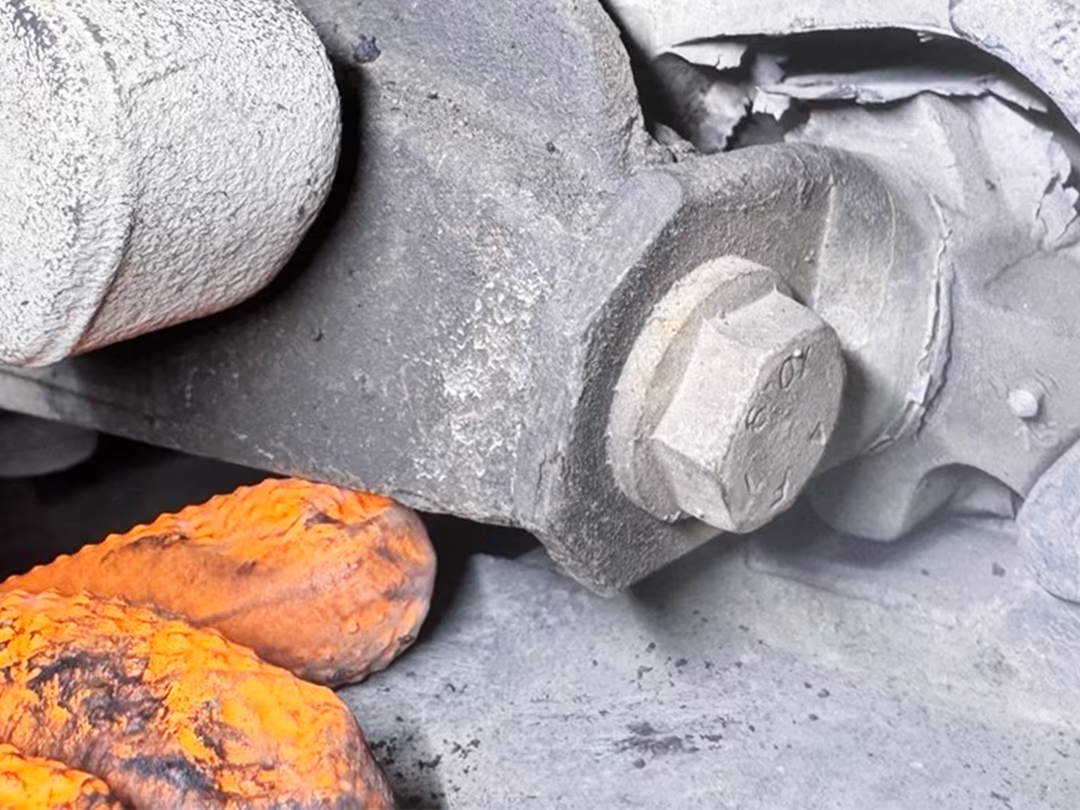
The chassis of this Sprinter was surprisingly good. The main suspension parts were in solid condition, so there was no reason to look for the problem where it did not exist. However, the driveshaft mount and handbrake mechanism still needed attention, as the handbrake parts were already starting to rust.
The findings included:
With this type of vehicle, it is important to find the real cause first. Otherwise, parts may be replaced without actually solving the jerking or noise.
Common causes include a damaged engine or transmission mount, play in the gear linkage, clutch wear, or a problem in the transmission system. The exact cause must be confirmed by diagnostics.
Brakes can squeak because of overheated discs, a pronounced disc edge, dirt, uneven wear, or poor contact between the pad and disc.
Courier vehicles operate in demanding city conditions. Constant stopping, starting, and loading wear out brakes, clutch components, mounts, and other mechanical parts faster.
 Order a service