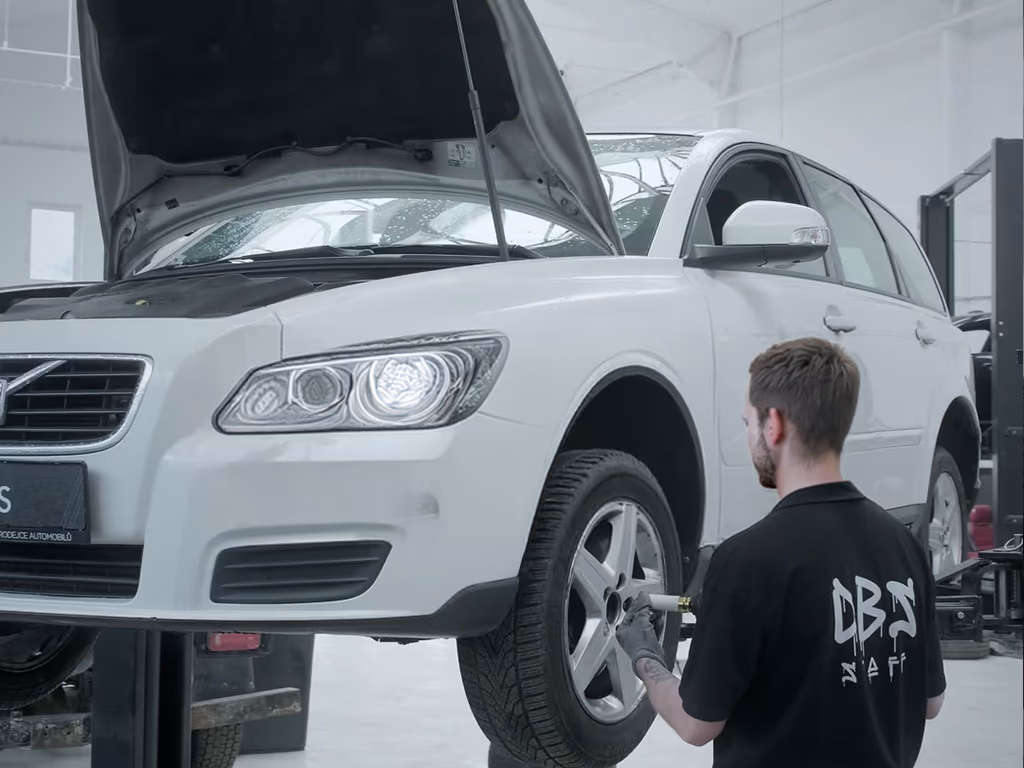
A 2009 Volvo V50 with nearly 210,000 km arrived at our workshop. The owner reported excessive body sway when cornering, harsh impacts over potholes, and unstable braking performance. After diagnostics, the cause was clear: the original shock absorbers were at the end of their lifespan, with the front right unit already leaking. At the same time, it was due for a tire change — the vehicle was still on winter tires with tread depth well below the recommended limit. Both services were completed within a single day.
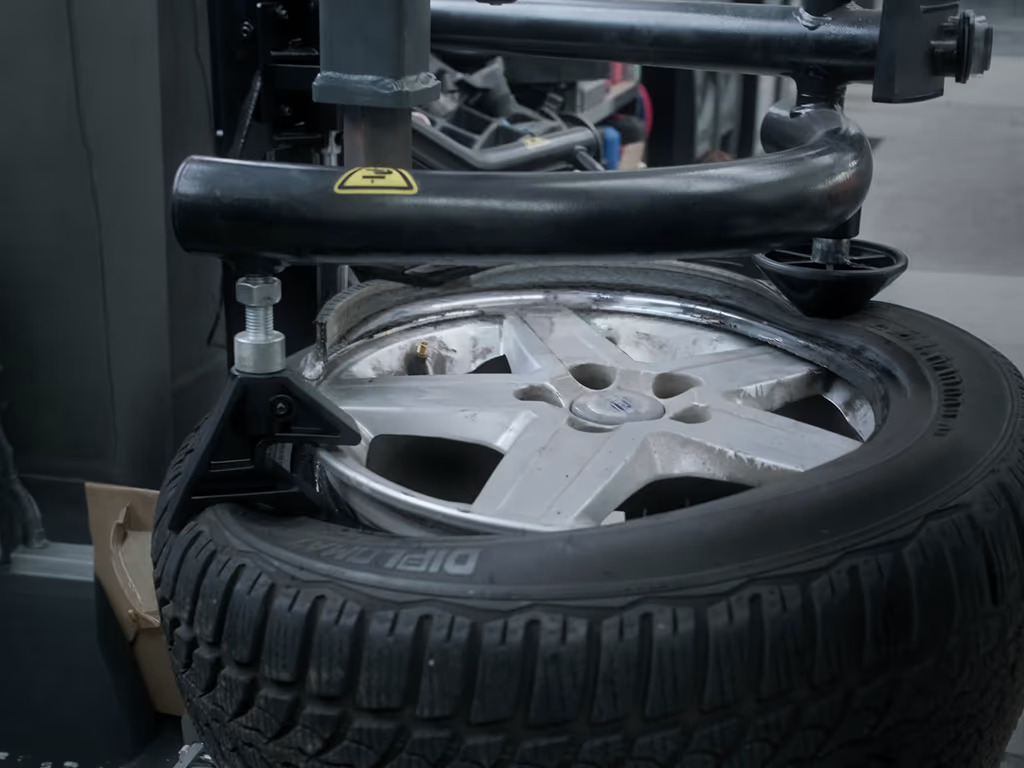
The vehicle arrived on worn winter tires, with uneven wear on the front axle indicating possible alignment issues. The tire service included a full replacement with new summer tires and all related procedures.
Process:
Worn or leaking shock absorbers significantly reduce vehicle safety — increasing braking distance, reducing stability in corners, and placing additional stress on other suspension components. For this Volvo V50, replacement was necessary.
Process:
The result is a vehicle with significantly improved stability, smoother ride over uneven surfaces, and safer braking performance.
Common signs include excessive body roll, harsh impacts over bumps, longer braking distances, uneven tire wear, or visible oil leakage.
Yes, we always recommend it. Replacing shocks affects suspension geometry, and proper alignment ensures precise handling and longer tire life.
As a general rule, when temperatures consistently exceed 7°C — typically from mid-March to April. Winter tires wear faster and perform worse in warm conditions.
With prior booking, both tire service and shock replacement can be completed in one day — usually within 3 to 4 hours depending on suspension condition.
The 2009 Volvo V50 underwent comprehensive suspension care, including shock absorber replacement and full tire service. After the repair, the vehicle drives more smoothly, remains stable, and offers significantly improved safety. For higher-mileage vehicles, we recommend checking shock absorbers every 50,000 km or during each tire change to prevent costly repairs and unnecessary risk.
Order a service